Se afișează postările cu eticheta urban life. Afișați toate postările

miercuri, 3 octombrie 2012

City breaks in Romania: Oradea


Very proud of itself, Oradea (Nagyvarad in Hungarian, Grosswardein in German) waits unpatiently and very happy his guests.
Oradea, the River Crisul Repede and the Downtown

You can reach Oradea coming from Hungary, through the charming puszta, or from Arad, but I can propose you a much better and more picturesque way. Namely, come from Cluj Napoca, cross the mountains, and don't miss the source of the River Crisul Repede. Further, to west, after the mountains come the hills, and very soon after the hills also end and the plain starts, you can see the majestic Oradea. The city emerges in the plain, and acts very confident and even very relaxing when coming from this direction! Really hard to explain this strange feeling, I please other visitors, or even locals, to tell me if they experienced the same feeling when entering Oradea. Very amazing for me, I always felt in Oradea excellent, like at home.
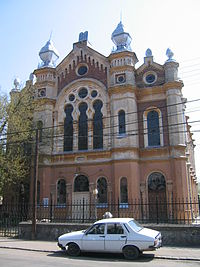
The interesting Synagogue from Oradea. Unfortunatelly, through massive deportation during WWII, the Jewish minority almost perished

Oradea is divided in tho halves by the River Crisul Repede. Inhabited from the antique by the Dacs and Romans (her Latin name is Varadinum), it is for the first time mentioned in the XIth century, and completely destroyed by the Mongol invasion of 1241. Rebuild, has gained in prosperity and local importance. The Turks also ruled the city between 1660-1692, followed by Hungarians, and Austrian Habsburg. In 1918 Oradea became part of Romania, which it enjoys up today, almost 100 years ago. Shortly, during WWII, Hitler gave North Transilvania (including Oradea) to Hungary, which ment a condamnation for the strong Jewish minority of Oradea (in 1944 about 25000 Jewish have been deported to the concentration camps! Today there is no more a jewish minority in Oradea, unfortunately).
Oradea, the River Crisul Repede, and the Hotel Continental Forum, the city's best and biggest.

Today, the Hungarian population of Oradea is about a quarter of the total, and sometimes appear again tensions between these people, set up mainly by silly extremists existing on both sides. Nevertheless, Oradea is a very peaceful city, with many mixed marriages and bilingv children, but living at high speed.

There is an old city in Oradea (baroc style from the end of XIXth century), and also a Medieval citadel. Look for History Museum (former Bishop residence), City Hall, Catholic Cathedral, The Black Eagle Palace. Walk in the Downtown and enjoy the people, the city, the weather, everything. Nice city, wonderful life.. Not far, in Felix, you can find thermal baths and follow longer or shorter  treatments, according to needs and budgets. I wish you not to use this opportunity, but keep in mind, who knows!

Some good words about my personel experiences in Oradea hotels. First, I met a Norwegian group on behalf of Karpaten Tourism, who was lead by Kjell Hagbarts and drove by Oivind, at Ramada Hotel. Gyury, Restaurant manager, cooked miraculously within minutes, a refreshing meal for my hungry tired tourists. Btw, he is Hungarian, speaks Romanian, and I have the honor to be among his friends ever since. And another experience, with a Swiss group, staying in Hotel Continental Forum, the city's biggest and best! Which honored allright his **** with the only mention, that the room cards lost easily their magnetic field!

Really a nice city, worths a visit. Contact me for any possible question about Oradea, feel free to do it.

luni, 20 august 2012

The most interesting cities of Romania


For the most urban of you, Romania has also something to offer, besides seaside, mountains and Danube Delta. And be sure to find in the Romanian restaurants the exquisite house wines, or special wine tastings. Many parks, museums and monuments will make your delight for sure.
Bucharest, the romanian Capital, is an eclectic city

The star among Romanian cities is Bucharest, without any doubt. Once named "Little Paris", Bucharest is neither the most beautiful, nor the agreeable city you can find, but for sure the most fascinating among the Romanian cities. Bucharest emits a lot of energy, you are going to feel it, and presents also a rather unique mix of Architecture styles. The treasures of the city, together with its wounds or its ugly places, make from Bucharest a half western, half oriental, and very Romanian Capital.
Sibiu is a charming typical Saxon city, with a remarcably well preserved Downtown. In 2006 Sibiu was the European Cultural Capital 

Transilvania counts a few big cities, charming through the mix of Architecture styles and culture. The magic charm of Sibiu (in German Hermannstadt) and Brasov (German Kronstadt) with their Medium Age and Saxon flair is easy to understand by anyone. They are similar in many aspects through history and culture, and conserved a lot of the Old City.
Cluj Napoca is a dynamic Romanian city

Cluj Napoca(German Klausenburg, Hungarian Koloszvar) is a very dynamic economic and cultural hub of Transilvania. Also very dynamic is Timisoara, the country's first free city during the Revolution of 1989. Timisoara represents really an economic wonder, and proudly rebuild all its German, Hungarian or Jewish houses.
Pradea was reinvented by genial architects by the beginning of the XXth century

Oradea has been transformed by genial architects by the beginning of XXth century, without losing something from its genuine baroque charm.

All these charming medium cities luck in Moldavia and Wallachia, with two or three exceptions. There also some differences in the quality of life, mentality among Transilvania and the Old Kingdom. Impossible not to notice.
Iasi has been for centuries the Moldavian capital. Amazing today, near the old buildings, museums, and churches, there is a Bohemian, student, liberty wind. Iasi (or Jassy) is a fascinating city, with a rich history (between the World Wars there were many Jewish living here).
Braila is maybe the most surprising Romanian city. Today it may seem ruined and sleepy, but only 100 years ago rich businessmen coming from all over Balkans and Armenia made it very thrifty, and you can notice it through the many churches and other public buildings.
Constanta is a big port to the Black Sea and a tourist hub.  Constanta proposes many bars, restaurants, as also a little historic city, which is maybe not very well preserved, but charming.

Besides all these wonderful cities, you have the little towns, which have been artificially developed during the communist regime to become industrial centers. Towns like Piatra Neamt, Calarasi, Bacau may seem very depressing on a winter afternoon, but you will find them also full of joy and life in a Spring morning. Notice everywhere in suburbs the obsolete factories which are not anymore in use.

Many of these cities have vineyards very close, and you can go for a wine tasting, if you don't feel the City breaks so interesting.

Google+