Se afișează postările cu eticheta Carpathians. Afișați toate postările

sâmbătă, 23 martie 2013

How To Discover The Amazing Hercules Bath In Romania


Baile Herculane/Herculesbad/Hercules Bath is really special among the Romanian spa resorts. Its huge prestige is due not only the long history of its wonderful healing powers(more than 2000 years), but also to its amazing hot mineral waters. These fabulous waters have been used by the legendary Hercules himself, representing according the locals one of the reason of his unearthly strength.

These waters have have many healing properties, and one can use them for inside or outside cure. Besides, qualified personnel offer some useful helping treatments, e.g. geriatric, acupunctural, apitherapic. You can have your daily water treatments very private in small bathrooms, or in bigger luxury pools (Ruschita marble. Your choice, your taste!). And if you come for a cure, you may not miss the fabulous environment. The town and resorts are surrounded by picturesque mountains and forests. You can walk there for days and weeks!
The fantastic Railway Station from Herculane is one of the most beautiful in Romania, and reminds to a Turkish bath

The position and climate of Baile Herculane is totally unique. Strong Mediterranean influences are to feel in the lack of very cold days, even during the worst Romanian winters. And about the vegetation, take a walk in the amazing Domogled National Park, with its unique endemic species, right near the resort.
The legendary Hercules must have been a local of Herculane

Reaching Herculane by train, you see first the railway station, of course. It is very old and stylish, one of the most beautiful railway stations in Romania. Its amazing Architecture reminds a Turkish bath! First, we walk and discover through Pecinisca, a quarter of the town Hercules Bath. Modern, with sad blocks of flats, and totally unspectacular. Cross the bridge on the Cerna River, build in the 70's on the place of an older, much nicer one, from 1896. On the right bank the rich forest simply falls on the town, while the left bank you can see the Domogled heights, inviting to a demanding walk. Not far is the breathtaking Central Park with a perfect mix of species. Very peaceful environment, with old couples walking, while the young kissing ones must be searched at night whether here, or in the hot pools. Daily, during the summer season, be sure to find the orchestra singing in the middle of the park. Discover here around the hotels Diana, Afrodita, and the old Bath Venera, build in 1752. On the other side of Cerna River, discover the wonderful Villa Livia, deeply Romanian in its Architecture. Very close, the Central Swimming Pool (1871) and the Hotel Traian, build in an interesting Vienna baroque style. A proud representing building is the former Casino, nowadays the Town museum. Don't miss the statue of Hercules in Hercules Bath, please, it is the symbol of all town and the locals are very proud about. They know a lot of myths and legends and pretend Hercules is simply one of them.
Baile Herculane is very stylish and peaceful

About the trekking and hiking trails I will let you know very soon, meet first this fabulous resort and spa retreat. You can do it in style in one of the resort's leading hotels, or on a budget. You are only pleased to enjoy life and the special environment of Baile Berculane.

duminică, 3 martie 2013

Epic Tours in The Fagaras Mountains, at the heart of Romania


Supposing you are a Millionaire, money don't matters and are last issue for you, and you must find the most eccentric way for visiting Romania. Under these circumstances, I would recommend doubtless and with no reserve starting your Romania journey through landing on Moldoveanu or Negoiu, Romania's highest peaks.

It is really a good idea, the best possible for visiting Romania in the most stylish possible way. But to be honest, I must confess: for such Romanian Eccentric Tours I had no demand, and that's why I must come back, addressing to the normal ordinary people like you and me. No matter, I have other checked  ideas for discovering Romania on a budget, but also in the Fagaras County ( also referred as Fagaras Country).
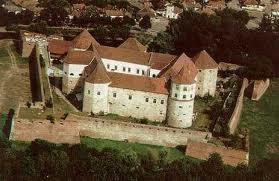
The Fagaras Fortress is fabulous, you can stay there and figure the daily medieval way of life

We have Fagaras Mountains, Fagaras fortress and town, Fagaras County and even Fagaras Country. This area stretches in the center of Romania, between Brasov and Sibiu, showing a long spectacular history, starting with the good old antique times, when the Romans conquered Dacia, forming the Romanian people (around 105 B.C.) and even before. Later, around year 1000 came the Hungarians, starting the interesting Medieval history of the Fagaras Country. Despite foreign occupations from Budapest and later on Vienna, Fagaras remained Romanian in the majority, having rich trade connections with the other Romanian countries, mainly Wallachia.
The small town of Victoria is a good base for conquering the  Fagaras Mountains

Start your discovery tour with the small town of Fagaras, whose life turns around the Medieval Fortress. It is certainly by far the town's most interesting sightseeing spot. Be sure to find there a few restaurants and a hotel. Please don't bother searching lodging anywhere else, stay here in this spectacular fortress and try to figure the medieval life. You can easily reach Fagaras by car and by train. At noon (normally is never too hot) you can take a walking tour of the town, observing the people, the churches, the remote mountains. Please keep in mind the direction, and start to explore them.
Conquering Moldoveanu requires training and a good shape

You can direct first to the town of Victoria, a typical industrial communist one. You are very close to the big Moldoveanu indeed! You can start climbing! Or you can go further to the village of Cartisoara, and drive on the breathtaking Transfagarasan road, reaching 2042 meters height. But there is no chance to conquer the Moldoveanu by car, it is 2500 meters and requires training and a good shape. About Transfagarasan Road there are a few legends. When Ceausescu build it in 1974 it has a strategic goal and the construction required its victims for sure ( probably much more than the officially recognized 40 deaths). In winter is always closed, as you can imagine, and crosses the longest tunnel in Romania, near Balea lac ( unfortunately not ventilated at all, and thus very dangerous). Another possibility to try conquering the big Moldoveanu, Romania's highest peak, is to stay here in the cabin Balea Lac, take the funicular to Balea Cascada and start climbing from there. Now it is not so difficult anymore, anyone can try it.

And once there you can really feel like a Millionaire! It really worth your time and efforts.

joi, 28 februarie 2013

Seeing Romania on a budget


If you want to visit Romania, but you can't afford see it in style, there is no problem. I am still very happy for that, and I am going to help you with all what I can, e.g. insider tips for finding the best destinations in Romania on a budget.

Romania is anyway normally not at all a very expensive destination. Who really wants to see it style, congrats, there are some exquisite  places with luxury hotels and restaurants. But you can go also backpacking in Romania, mixing with the locals and staying on a tiny budget. My first tip: sparing by meals is very easy in Romania, and you have got two possibilities doing that. First one: almost all the restaurants have an unbeatable offer, called Meniul zilei (Today's special) costing 4,5 Euros and containing 3 courses! The other possibility is buying vegetables from the locals markets, exactly like the happy Romanians! Not only that you are going to spare a lot of money, with respect to the tiny budget you have, but you will probably rediscover the incredible genuine flavor of the vegetables.
A typical cheap pension in Romania, offering human contacts and cheap  excellent food.

And be sure to find a lot of best  wine in bulk, at prices of around 2 Euros for the best sorts. You will surely draw the conclusion of affording to stay longer even with your low budget! And the people here are fantastic friendly and ready to give you a hand in every situation. If you tell them about your Romanian ancestors or about the fantastic feeling this wonderful land is awakening in you they will be very happy, and will surely invite you to the dinner. Hereby you won a friend for the rest of your life.

You can stay on a budget even in the exquisite expensive Bucharest. Don't need to stay to the Intercontinental Hotel **** in the very center( which is ugly and artificial, btw), you can choice Hotel Cismigiu ** and enjoy better the life and the present minute.
Hotel Cismigiu in Bucharest is a cheap extremely satisfying  alternative to a fancy hotel, but you can better enjoy the life 

In the rest of the country you can find everywhere cheap pensions, which are not very hard to find. They offer also cheap but excellent meals (e.g. Meniul zilei!). Better than that could only be staying by a local, who has invited you, as he enjoys your presence, or hires his extra rooms, as the pupils have left home (working and living probably somewhere in the wide world). My advice: ask about the price, to avoid any unpleasant surprise, and don't pay more than 20 Euros per night!

Backpacking in Romania is really an event, offering you the perfect opportunity to stay fit and see some of the savagest landscapes in Europe. Backpacking in Romania also allows you visit the most remote mountain cabins. After a few hours of climbing mountains no one will notice the lack of comfort, but only warmly appreciate the soft mattress from the common dormitories. And if the running water doesn't work perfectly, you have the creek outside. The view and landscape will perfectly compensate any efforts. I reckon to recommend now The Fagaras Mountains, the highest in Romania. Search there the cabins Balea Lac or Balea Cascada, climb our national symbols Moldoveanu and Negoiu, relax and enjoy. Observe the fantastic view on the Transfagarasan Road, which is really spectacular, one of the world's best.
Cabana Balea Lac in the spectacular Fagaras mountains, next to the Transfagarasan road

I gave you a few suggestions, let me know about your opinions about it, and tell me if I shall be more specific about programs and prices. But remember the important thing: it is very easy to visit Romania on a budget. Anyone can and shall afford it, and in some directions you can do it with style! I stay to your disposal for further detailed matters.

sâmbătă, 12 ianuarie 2013

Epic little towns in the Romanian Bucovina


If you came in Bucovina and stay in Suceava do discover the legendary painted monasteries,
you have the wonderful chance and opportunity to discover a few interesting places, according to your specific interests and hobbies.

You can, e.g. to ride your bike on the hills around, and discover the churches and the villages on slow speed, which I recommended more times. Not far from Suceava, beyond the hills, are the mountains, and you can walking and hiking in these wonderful mountains, watching carefully the the rich world of local plants and animals. For the fans of urban life and civilization I have also some tips. Discover first the city of Suceava, and compare it afterwards with the little towns of Radauti, Gura Humorului, Campulung Moldovenesc, Falticeni or Vatra Dornei. And that's the today issue.
The little town of falticeni, a Romanian Florence. Here the communist blocks of flat

I would propose as a first target the town of Campulung Moldovenesc. It lies at 600 meters height and enjoys an excellent tempered climate. It si very long (good 15 kilometers), as its development has been made along the main road. Very long are here the winters, as also very snow rich, and the summers chilly and rainy. The mountain peaks of Rarau and Giumalau are close to the town, and many hiking paths lead from the town to those peaks. In downtown you can still see some interesting buildings from the Austrian period, before 1918. Shortly, the best conditions to make a good climatic and tourist resort. which Campulung really is. Discover in Campulung Moldovenesc , whose economic life is tighten to the wood, the impressive "Museum of wood crafts". It is old, hosted in a wonderful building, with 10 exhibiting rooms, as also an exhibition outside, under the sky. You will try to imagine how old these artifacts have been used in the area for wood working, hunting and fishing. There is even an amazing horse driven wine barrel (for me the most important piece from the museum, you can bet on it). Outside expo contains two traditional houses, two or three centuries old.
Aerial view of the picturesque Campulung Moldovenesc

Also in Campulung Moldovenesc a private collection, named Ioan Tugui, has an convincing expositions of 5000 wooden spoons, mainly from Bucovina. Besides many carpets, pottery and coins.

Much better renowned in Romania and worldwide is the picturesque town and tourist resort Vatra Dornei, lieing in an breathtaking depression, on a height of 800 meters. The town developed first as an important trade point in the area, on terraces at different levels. All around, small mountains, not higher than 1300 meters, and only 3 months yearly of hot season. If you dream to ski, Vatra Dornei is the right place, with 120 days of snowy days every year. All the mountains around have a volcanic origin, and in the area there are many sources of mineral waters. The downtown Vatra Dornei and mainly the nice Casino are very well kept. Find and discover there the Museum of Natural Sciences, with his Ethnographic or Biology departments. A special mention for the huge Central Park (wider than 50 ha, means aproximately 100 accres). It is protected as a natural reserve, and the squirels in the park are friendly, you may feed them! I reckon, that a good occasion to discover Vatra Dornei could also be the Festival of Winter Traditions, starting on 28th December.
vatra Dornei is a favorite target for ski and winter sports

Last for today, but not least, the town of Falticeni, which is comparable with the Italian Florence, due to the high density of notorious culture people having the roots in the area: Ion Creanga, Mihai Eminescu, Ion Irimescu and many others more. Their presence and relation with Falticeni is remembered in the local Gallery of Important People. 
Falticeni is lower than the other mentioned towns (400 meters) and you can see all around charming orchards. You can discover the local traditions in the best conditions taking part to the local festival, one in Summer, on 20th July, and one in Winter, on the 27th December.


marți, 18 decembrie 2012

Most important things to do in Northern Romania


In the Romanian province of Bucovina, District Suceava, very close to the Ukraina border, you have a lot of things to and to discover.
 A good possibility is staying in Suceava with its good hotels, and exploring every day, a bigger or smaller neighboring area. Don't think now to Maramures and Satu Mare, nevertheless they are also in the extreme North of Romania. Now we shall be focused on Bucovina.

Observe please the hills and the mountains, making this area so beautiful and picturesque. The villages seem to be rich, the houses are big. Traditions are well kept and the rural society seems to be still o.k.! Don't miss in one day of your holidays in the area the black pottery of Marginea, which is very cute and has a long tradition.

On the day when you are going to visit the Putna Monastery, allow yourself some extra hours for an instructive trip to Radauti. The town of Radauti is easy accessible through a wide plain, the only one proper plain in the hilly Bucovina! A few centuries ago Radauti was an interesting ethnic mix, counting Romanian, Germans, Jews, Polish and other nationalities.
The St Nicholas Church of Radauti, nowadays the Metropolitan cathedral

Radauti has been for centuries an important trade point, which is still today, despite the huge difference comparing to the prosperous Suceava, the local star and capital. Radauti hosted even an important Orthodox archbishop, but faced many internal and fratricide fights, making it to decay a little, for the profit of Suceava.

If you arrive in Radauti at noon, or at night, it is the right time to do a culinary trip to restaurant Nordic, asking about Lidia Sticlet. I hope she is still there, at her leading place, and will strive to fill the most bizarre and cosmopolitan culinary wishes (nevertheless, she has a soft spot for the Romanian national meals, like cabbage rolls, with a half dry white wine).
The ancient Bogdana Monastery, build by the grounders of the Moldavian dynasty, namely bogdan I, which is burried here.

If you enter the town at other moment of the day, start your cultural trip from the very centre, with the Etnographic Museum. You will be able to understand better afterwards the rich long history of the town, as also the agricultural civilization of the area. Observe and admire the rich collections of wooden icons, sledges or horse wagons made by the local craftsmen, as also other agricultural  tools widely used in the area. The objects concerning the Hutzuls are of the utmost importance, because this mystery civilization is really fascinating. No one was able to answer to the simple question " Where come the Hutzuls from?". But they do exist in many remote villages, are Orthodox of the ancient calendar an their mainly occupations are shepherds and horse keeping ( they breed a special art of horses, also known as Hutzul, which is huge and strong).
The Etnographic museum from Radati is a good starting point for your trip in this area

Walk further on the streets of Radauti, towards Jewish temple, build at 1876. Very intrepid bankers, trade agents or industrials, the Jews build schools, hospital, temples, and even an establishment for old people! The Jews started to come by the end of the XVIIIth century, and were forced to leave the city in 1941, when the German troops occupied the town. Very few people escaped the Holocaust, and consequently nowadays there are very few people of this ethnic group in the town (mainly old people).

Next comes the Orthodox church of St. Nicholas, which is really an important worship building with big dimensions and interesting architecture. Next to St Nicholas church you may see Catholic or Lutheran churches, which belonged once to the German colonists, brought by the Austrian administration of Bucovina. They were craftsmen, skilled glass blowers, bricklayers, carpenters as also army officers or official clerks. But a visit in Radauti is not complete without seeing the Bogdana Monastery. Its very old and very simple, without the normal signs of importance and opulence of a Royal church. The Bogdana monastery looks simply like a peasant house, with a round pointed roof. Thick walls, no towers, these are other characteristics of this amazing church. For a history or culture freak is simply a must, because here is buried Bogdan, the first ruler of Moldavia, who reached the area coming by horse from Maramures with an important suite.


vineri, 7 decembrie 2012

Romanian Festivals in 2013 (Part II)


We have a lot of things to do, our job is to fill all the major festivals in Romania for the coming year. Not an easy task, there are some extra local little unknown festivals, which are even more picturesque than these official ones, sometimes overcrowded due to exaggerated publicity.

June Festivals
Brancovenesti (Transilvania)- Cherry Festival, on the first Sunday.
Bucharest hosts The carnival, consisting on one week long of public street manifestations.
Cluj-Napoca enjoys the International Transilvania Film festival
Bucharest on 21st : The Feast of music
Bucharest again: Beer Festival with music in the Herastrau Park
Avram Iancu (by Oradea): the sheep Festival (Tacasele)
Miercurea Ciuc-Pilgrimage of the Catholic Szekelyi on the Whitsuntide
Odorheiu Secuiesc: Festival and market of skilled artisans
A specific Romanian Dance, Hora (The Round) as you can see in any Romanian traditional festival

July Festivals
Vadu Izei: traditional music festival, four days long
Somcuta Mare (Maramures): The oak festival, popular music and traditions
Sibiu: International festival of popular and country music
Ilisesti (Suceava), the second Sunday, The Folklore Festival of The Rarau mountain
Mount Gaina (Western Carpathians) on the last Sunday before 20th : The Girl Market, a big Festival with concerts and  traditional dances
Sighisoara, the last week: Festival of Medieval Art
Targu-Mures, the last five days: Rock Music festival Felsziget
Mangalia, the third week end: Callatis Music Festival
Traditional Festival in Sibiu

August Festivals
Marginimea Sibiului (Transilvania) -first Saturday: The Bear Day
Bucharest,the second week end, The Hora Festival in Village museum, dedicated to Romanian folkloric groups
Constanta, the first week: National Music Festival
Sibiu, the first week: national festival of popular traditions, hosted in Astra Museum
Baia mare hosts many Traditional Festivals

September Festival
Mamaia, the first week: International Festival of Popular Music
Brasov, the first week: International festival of Chamber Music
Lesu (Transilvania), first Sunday: Traditional Festival (sheepherds)
Bucharest, three weeks long: George Enescu Music Festival
Targoviste (Wallachia), middle of the month: Festival of Folkloric Song Miorita
Biertan (Transilvania): Saxon Festival (Sachsentreffen)
Sibiu, by the end of the month: International Oper Festival
Brasov, the end of month: Golden deer, International Entertainment Music Festival, with many Romanian and international first class stars


marți, 20 noiembrie 2012

Prahova Valley, a Romanian Royal getaway


If you need to relax and detox, if you need to forget the usual trouble and the daily routine, I have the right medicine for you. I really recommend to go from Bucharest to Brasov, through Ploiesti on the A1 highway, along the spectacular Prahova Valley. But please keep in mind, that this highway is the busiest in Romania, and you must avoid it during the week end rush hours, e.g. Friday and Sunday afternoon.

The Prahova is simply superb,  meanders through Bucegi and Baiului Mountains, and could be named The Royal Valley of Romania, because the former King Carol I used to live here, in Sinaia, where he managed to build the fantastic Peles Castle from stone, wood and precious materials. Consequently, all his suite adopted Sinaia as a summer Capital. Ever since that period, the beginning of XXth century, the skiers and mountain climbers are the masters of these places.
Valea Prahovei is simply superb, the best place to disconnect from anything else.

Due to its proximity to Bucharest, Prahova Valley was an important connection between Wallachia and Transilvania., centuries before opening of a railway and a highway in 1880. Because the old highway is obsolete and overcrowded sometimes, there are plans for building a speed highway between Bucharest and Budapest, but the environmental price will be huge ( nowadays in the big forests of the area you can still find bears, wolves and lynxes). The legendary stylish train Orient Express drove this way on his long journey between Paris and Istanbul.
Peles Castle in Sinaia is a must see for any art freak

On the way to the mountains, discover first the quiet town of Campina, where you can find two interesting museums. One of them refers to Nicolae Grigorescu, the most important Romanian painter from all times, which lived here during its last years of life, and left his last masterpiece unaccomplished. He started his career by painting churches and monasteries, and finally an important politician, impressed by his paintings, offered him a scholarship in Paris. Nowadays, if you have the chance to buy a painting of grigorescu, please don't hesitate, it is a safer placement than gold! The secon interesting museum in Campina is Hasdeu Memorial Museum, with a very strange spiritual atmosphere, as Hasdeu, an important political and cultural personality, tried to further communicate with his beloved genial daughter Julia, died at 18 years.

Further, you reach the town of Breaza, which is simply very long, build mainly along the street, and very famous due to its excellent golf coarse. Afterwards, within minutes, you are in Sinaia, and you don't need to hurry up anymore. Enjoy Sinaia in all its splendor, it deserves. The quiet town is very animated on week ends, but in the rest of time keeps an interesting flair of the beginning of XXth Century. After King Carol set here his summer residence emmerged many luxury villas, his suite visited the Casino, and took part to hunting. If you are an art freak, don't miss the Peles Castle, it is simply superb. It was an avangarde building for Romania of those times, heated and electrified. Observe please the wood works, while going from the honor room in the weapon and Marocco room! Next to it, the Pelisor Castle, a paradise for Art Nouveau freaks.

Go deep in the Mountains by the cabin, if you are in the mood to climb them.  Further, before reaching Brasov, find Busteni and Predeal, very important for addicted skiers.

luni, 19 noiembrie 2012

Best way to discover the Hills around Buzau


Living Bucharest to East, after only 100 km of an endless boring plain you can see with a deep relief the hills of the Northern side of district Buzau. Discovering this intensiv village life in the hidden valleys of the hills announcing the Carpathians will be a big pleasure. The colored rural shows is played by the people, animals and the rich vegetation with a tremendous success. This plain-mountain hilly region is very particular, similar with nothing else in Romania.
The City Council of Buzau is the landmark

But let's start our discovery with the city of Buzau, which is not the best, but also not the last among Romanian cities. The city is an industrial one with 130000 inhabitants, and is one of the oldest in all Romania and looks nowadays typical Romanian. Observe the central market and its animation, and also the rroms quarters of the city (Simileasca, Chimica, Micro 14). Don't miss in downtown the fancy Mayoralty,older than 100 years and rebuild after the WWII. Despite its respectable age, it is impossible to see buildings older than XVIIIth century, as the city was subject of repeted destroys caused by Turks, or Earthquakes.
The House Vergu-Manaila in Buzau is one of the oldest in the city 


Every 6 year there is an Earthquake in the area, approximately 6 degrees Richter, and every 50 years a major earthquake of 7 degrees Richter causes big damages in the all Romania. The explanation is easy: this area Focsani-Buzau lies on the intersection of three major geological plates, namely the European, the Asian, and the African one, causing huge stresses.
The picturescue monastery of Ciolanu, 20 km away from Buzau

What you have to see in Buzau the Archbishop residence, observing the older one, from 1649 build by Matei Basarab. Also, the district Museum, worth your visit, despite the unhappy obsolete manner of presentation. On weekends and at night the main occupation of the locals is walking in the superb Park Crang. Seniors play chess, young married do photos, and young boys and girls are fixing each other. Buzau is also proud of its pretzels (secret recipe and ingredients), the local brandy (tzuica) or  wines (Dealu Mare, Dealurile Buzaului).

There are more sorts of wines in the area, the Reds (Cabernet Sauvignon, Black Feteasca) or Whites (White feteasca, Riesling, Muscat) . For the small familial farms, visit the villages of Soresti or Blajani . If it happens on the first Sunday of July, you are very lucky, there is the Wine Festival on place! More exquisite wines can be discovered in Pietroasele.
The Crang Park from Buzau is a major attraction, especially at nights and on week ends

A recommended target in the neigbourhood would be the Monastery of Ciolanu, 20 km away from Buzau to brasov. The Monastery is very old, very quiet ( excepting week ends)  and the monks buildings are covered in flowers, similar to the village. Next to the monastery you will discover the amazing sculptures of Magura. Going further to the forest, you can find the picturesque little village of Colti, the center of an area rich on amber. You can even find here an interesting Museum of Amber near the school (my tip: if closed, go and search the key to the Council!). If you are not tired, you can discover in the forest a few stone churches (no access for the cars). If you are lucky, you can still find some amber, took by the locals from their secret places ( the mines are closed from 1948).
The spectacular strange phenomenon of Moody Volcanoes in Berca

Another important attraction are the Mood Volcanoes from Berca. It is a strange phenomenon, the gas comes to the surface taking with it some bubbles, resulting in bigger or smaller hills of mood, similar to small volcano crater. Don't step on them, only observe from a safe distance, otherwise is dangerous! The visits are no more possible on bad weather (simply too much mood!).

Going further, you can reach Brasov, over the mountains, passing through some unforgettable landscapes.

vineri, 16 noiembrie 2012

How to discover the Romanian Monasteries from Oltenia


The Romanian monasteries are build from stone and faith. The Romanian leaders wished always to engrave their faith in wood or stone, building churches and monasteries whether next to their residences, or in secret retreat places, good for meditation. The painted monasteries from Bucovina attract many tourists, while the monasteries from Oltenia are unfair neglected.
The Cozia Monastery is very nice, very quiet and meaningful for any Romanian: here is buried Mircea cel batran.

But beween Ramnicu Valcea and Targu Jiu, in the superb hilly region of Northern Oltenia  the Romanian rulers Mircea cel Batran, Matei Basarab, and Constantin Brancoveanu build monasteries. A special mention for Brancoveanu, an excellent diplomat who was able to keep Wallachia in peace for a long period. Thus he contributed to the exceptional cultural development of Wallachia during the XVIIth and XVIIIth century. He also created a personal charming architecture style carrying his name, by mixing the Italian Renaissance with baroque and Serbian or Byzantin influences.
The Govora monastery, very close to Ramnicu Valcea

You can discover the Monasteries of Oltenia starting from Ramnicu Valcea, on the busy DN7 leading to Sibiu, along the River Olt and the spectacular gorges of Turnu Rosu.

Discover first the Monastery of Cozia, a discreet hidden apparition between the noisy highway and the River Olt. It was buil at 1387 by the ruler Mircea cel Batran, who is buried here. The church has been build by Serbian masters from Moravia,, concentrating a wide palet of ornamental works. Constantin Brancoveanu added at 1707 the painted rood screens. Pleaes observe the painting of the grounder and the details of his clothes. Discover further the buildings from different ages and the small museum.

Drive through Ramnicu Valcea on DN67  following the Govora Monastery, build by Matei Basarab at 1640,  on the place of an older church. Matei Basarab also put here in function a printing shop, one of the first in the Romanian countries. The church is surrounded by flower, and also by solid walls. The rood screen is charming for real!
The Monastery Dintr-un lemn  is far way from any port or airport, but in a misterious way protects airman and seaman!

The monastery Dintr-un lemn ( meaning from Romanian 'from a single piece of wood) is pretty isolated, but very solid (its name is a guarantee for that). The interior is very protective, warm and familiar. Amazingly, based on an unknown reason and myth, this church protects the seaman and the airman!
The Horezu monastery and the charming Brancoveanu Architecture style

Don't forget in the area the famous vineyards from Samburesti and Dragasani, but you have an other important target, the Monastery Horezu, the pearl among all these monasteries from Oltenia! The land scape is extraordinary, and you must enter an yellow wooden door. It is the masterpiece of Constantin Brancoveanu and an UNESCO heritage. The church is in the centre of a big yard, closed aside by Monastery builing with big carved columns. Recognize and enjoy the Brancoveanu Architecture style through the perfect harmony between its proportions and the discreet ornaments. In this breathtaking church dreamt brancoveanu to stay in the ethernal sleep, considering the monastery as his last will in stone and faith.

duminică, 28 octombrie 2012

Exploring caves in Romania


Romania has a wide offer for adventurers, and an important issue for these freaks would be the caves (speology is nevertheless a Romanian discovery, thinking to Emil Racovita, one of his pioneers).
Muntii Apuseni, or the Romanian Western carpathians,  are build in a soft lime stone, which made possible an intensive water erosion resulting in many cute caves.

The best area for visiting caves in Romania is the the Western Carpathians (Muntii Apuseni) due to their soft limestone structure. One of the possible ways is leaving Oradea in Direction Deva, turning right to Remetea, and then driving to Meziad, our first target. The Meziad cave is waiting for you for visiting everyday between 9 and 17 hours, less on Mondays. Count on a little entrance fee and enjoy the 5 km long galleries of Meziad cave, discovered in 1849 by a local climber, and was among the first in Romania opened for its fantastic touristic potential. Observe carefully stalactites, stalagmites and the remainings of prehistoric bears sheltering here.
Pestera Ursilor (The Bears Cave) is very spectacular and you can't miss it.

Afterwards follow the way to Lacul Ursu. Beware if it is raining, this way is no more accessible. Lacul Ursu ( The bear lake) is a wonderful lake with a very strange form in the middle of mountains, promising adventures to every step. The lake is also famous among fishermen, and the trout captured here is very tasty. Leaving the lake to south you go through Valea Iadului (The hell valley) which is really very nice and cute, but bears this name on unknown matter. 6 km away from Lacul Ursu you must be able to find and see a water falls, namely Iadolina; if not, you are on the wrong way. Very close, Stana de Vale, a resort for winter and ski, which can act a little disappointing, despite its superb position at 1100 meters altitude. The offer on hotels is not so rich, as also the possibilities of skiing are not brillant.
Please, don't try to do that, is only for skilled trained climber

Very close, The  Monastery  of the Saints Peter and Paul, one of the newest in Romania. It lacks on any possibility of lodging, but is a good starting and orientation point for the many walking trips you can try in the neighborhood. A path leads to Pietroasa, 14 km away direction  south when you can't miss the wooden church from the XVIIth century. From there, very easy and quick to the last targets, Pestera Ursilor (The Bears' Cave) and Pestera Magura. Magura is opened mainly for specialists and experts coming in organized groups, but Pestera Ursilor is worth to a visit and your attention. You can do there a guided tour lasting 1 hour which will delight you, as the cave is very special and spectacular with many stactites, stalagmites, holes and rocks. In some areas looks like a future city, as imagined in Hollywood. Not very big and discovered by accident, has many skeletons of an extincted species of bear.
Skiing in Arieseni, on the beginners' slope

After coming back on the highway turn please left to Lunca, following the indicator to Turda. Within short time you can reach Baita, one of the oldest mining areas in Romania. Already during the Middle Age silver and copper have been gained here, but very famous became this place during the communist era: during the 50' years of the XXth century thousands of miners and soldiers exploited 30 000 tonnes of Uranium, which has been entirely send to the Soviet Union. Radiations are still an issue among the former and retired miners! Beyond the Pass Vartop you can find Arieseni, after a pleasant downhill. Arieseni is an other becoming ski resort in birth state. Amazing in Arieseni, a very unusual church from the XVIIIth century, which is not specially beautiful, but striking.

joi, 25 octombrie 2012

Alba Iulia, a symbol for any Romanian


Visiting Alba Iulia means a lot to any Romanian, and I could compare with some well known pilgrimages. Even if you are not a Romanian, the town of Alba Iulia is a visit worth.
Roman walls in Alba Iulia, antic Apullum

Alba Iulia (hungarian Gyulafehervar; German Karlsburg or Weissenburg) has a wonderful fortress, build by the Habsburgs in the XVIIIth century. Much earlier, in the antic times, on the place was the city of Apullum, already a capital and the most important local city. In Middle Age,during  the XVIth century, Alba Iulia was again the  capital of The Transilvania Principality. Newer, on the 1st December 1918, 100000 people representing the Romanians and the Saxons of Transilvania, the unifying of Transilvania with Romania. Maybe you understand now why is the town so important in the Romanian history.
The main entrance gate in the Fortress of Alba Iulia has a baroque tower; pls observe back the Orthodox Cathedral

Much better for you if visiting Alba Iulia have not this very high emotional charge. Drive in the city, see the impersonal blocks of flats, pass through center to the fortress (Cetate) and take a wonderful walk in the area. Admire the Catholic Cathedral, build in the XIIIth century, a model of Medieval architecture. Admire the Orthodox Cathedral, bild in 1921, where the King Ferdinand was crowned in 1922 as King of all Romania. Admire the gate of the fortress. All these walls are full with history, allow me giving another example: in 1784 the Romanians lead by Horea, Closca and Crisan fought for their social and national rights against the leading Hungarians. Very successfully in the beginning, but at the end the Hungarians defeated the Romanians and executed the leaders inside this fortress, through lugging on the wheel!
The Catholic Cathedral from Alba Iulia is very old (XIIIth century) and constitutes a model of Medieval architecture

Visit the interesting Unity Museum, and if you need a rest after all these cultural adventures, you are welcomed one of the many Restaurants inside the fortress. Please avoid fast-food, and make a wiser choice, take a Romanian menu (soup, main dish,desert), with a glass of wine, costing 9-10 Euros.
Replacing the Guards in Alba Iulia is a coloured show

After that relaxing lunch, if you are still in the mood, continue discovering the town of Alba Iulia, searching the well known Bathyaneum library, a really sanctuary hosting a vast collection of Medieval books. Really a must for any culture freaks. From Alba Iulia you can drive to Arad, or in the neighboring mountains, offering some interesting places (need only to hurry up,the winter is coming!). Jidvei and Blaj are also in the area, and you can take part there to exquisite wine tasting!


duminică, 21 octombrie 2012

A Romanian Wine Festival


Focsani is a little town 200 km away from Bucharest. Nice, peaceful, clean enough, but has not very spectacular old architecture landmarks, as do  other bigger or smaller cities in Romania. During Ceausescu's forced industrialization policy, all Downtown has been destroyed, and instead have been build so many identical blocks of flats. Maybe it is easier to live in these match boxes, but the city itself acts grey and is not able to differentiate comparing to other sad grey towns countrywide.
In the very peaceful like Focsani, the Wine Festival is a necesary celebration, which everyone waits  in the Autumn

Nevertheless, there are also some things making Focsani special. First of all, in the Vrancea mountains, not far from Focsani (80 km) have the origin and epicenter all the major earthquakes who scares all the Romanians every 50 years. Amazingly, these earthquake don't do much harm in Focsani, but can cause large scale destructions in Bucharest and other towns lieing 200 km away or more! One might say, the people of Focsani are the most feared Romaniawide!
At the presentation stand of vineyard Rovinex I managed to taste an excellent Feteasca Neagra from 2006

Second, Focsani is a local center of the biggest vineyards in all Romania. Consequently, it is normal to organize here an yearly Wine Festival, and this edition from 2012 has a huge budget, which is not so normal in a poor country like Romania. But the people live their lives and take profit from this huge festival with consistent budget. Most important than everything else, the wine is being honored as it deserves, and many exquisite wine tastings ruled by leading someliers took place between 19th-21st of October 2012.
The Romanian "mici" or "mititei" are one of the stars of the Wine Festival. They enjoy a good tradition and reputation, and are easy to pair practically with any wine.

My personal favorite was a fabulous Feteasca Neagra 2006 from Rovinex, which has such a strong bouquet.  Legends say, that you can get drunk with Feteasca Neagra even without drinking a single drop! That impossible to describe bouquet is all the secret! Further, when you have this wine in your mouth you'll notice! Tastes like dried wood fruits, and it is not wise to hold it in the mouth longer than 60 seconds, or you can get drunk again only through tongue absorbtion. Last, you must spit this excellent dangerous wine, no matter how sorry you might be. Pair this wine with a roasted meat or chicken, may be even with mititei, the local star of the Festival and uncrowned King.
Imagine how difficult is for the poor locals to drink the contents of so many barels, paired with mici or  meat.

May be next year you will have the time to see Festival alive, if you will go healthy and wealthy through the End of The World. You need only some time and a small budget, as I have as always some unbeatable propositions, need only to mail at dorugiu@gmx.net or to call at 0726268717
Google+